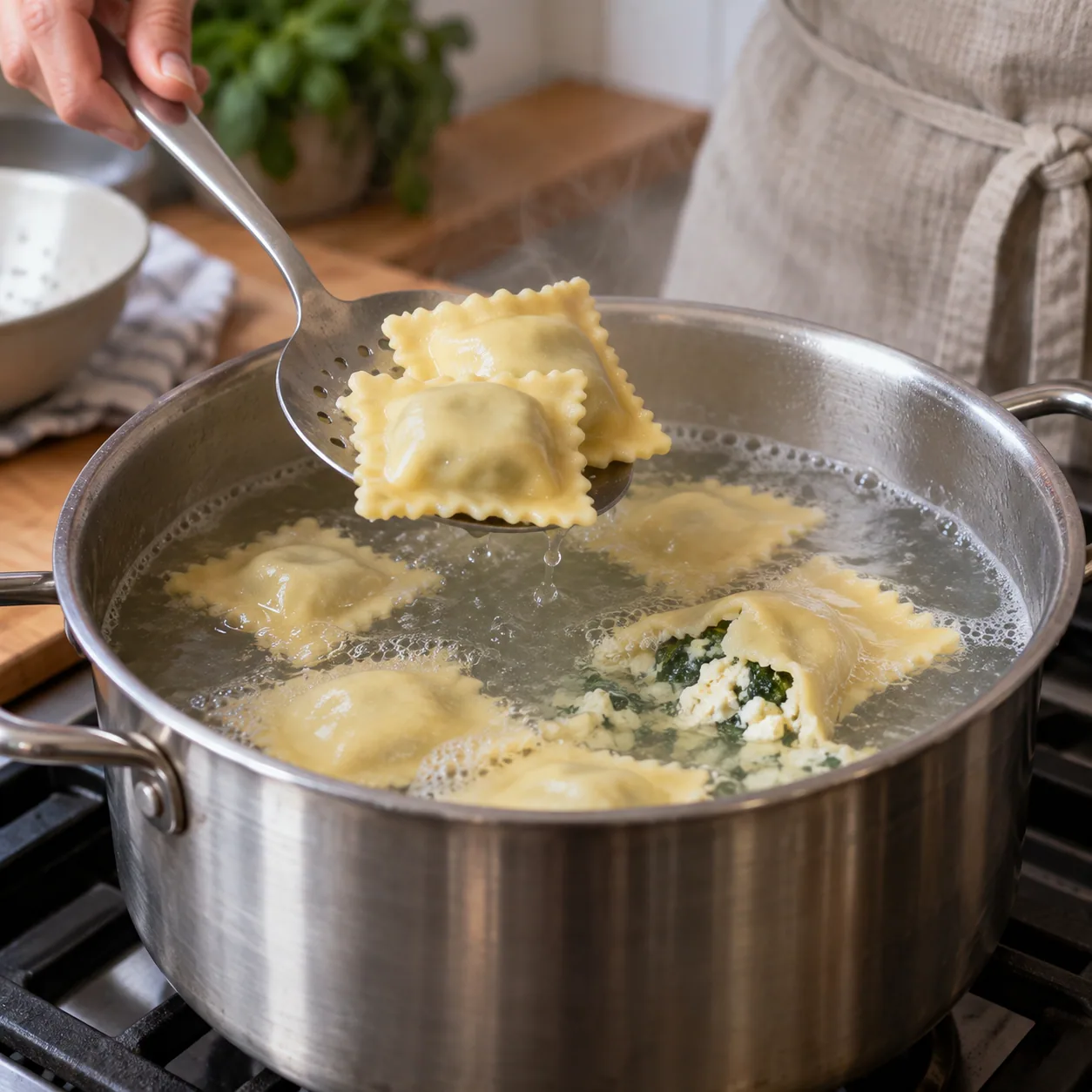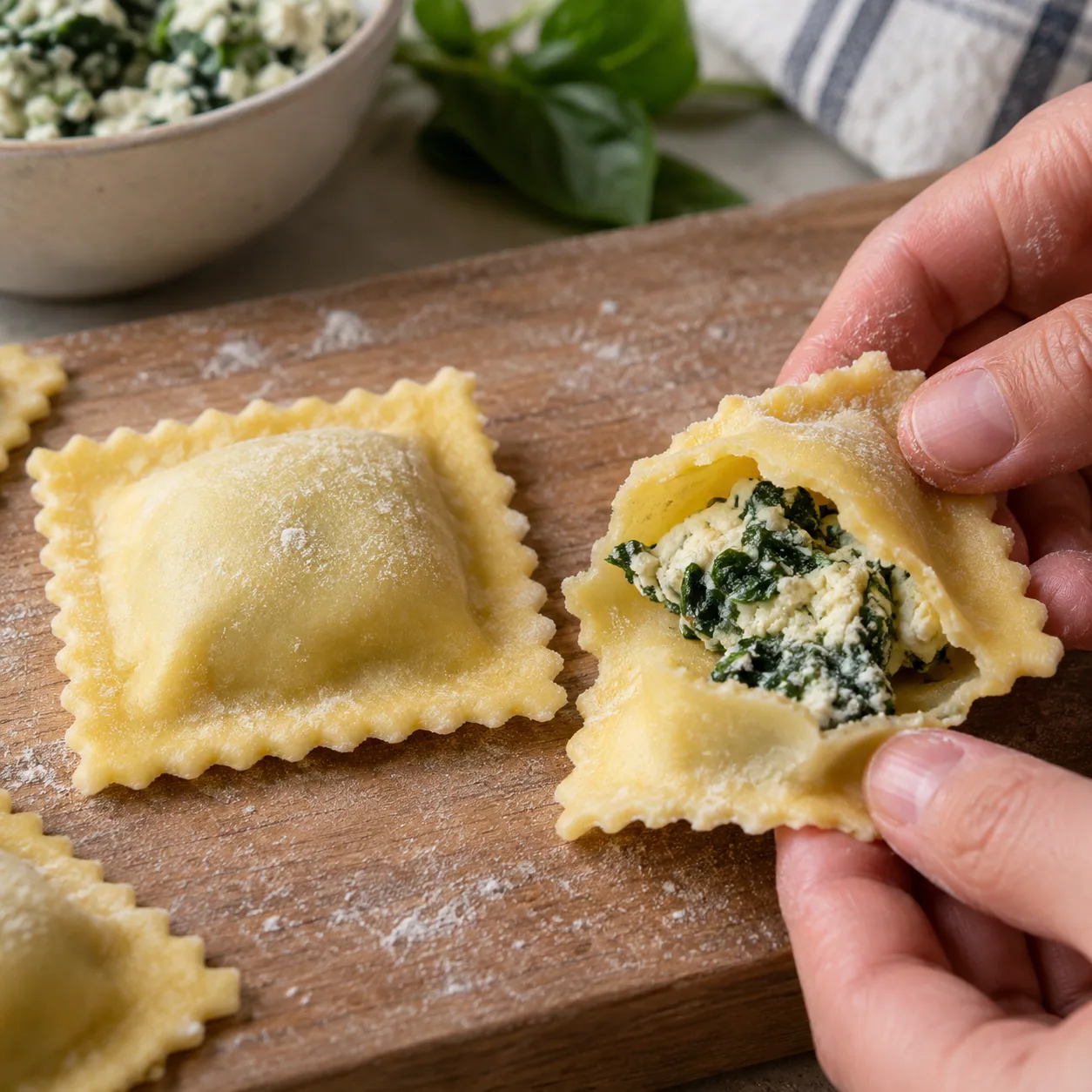
A burst ravioli does not point to one automatic cause. Inspect where it opened and when: trapped air can expand, filling on the border can interfere with the seal, and overlapping pieces can make cooking harder to control. Change the failed stage on the next small portion rather than rebuilding the entire recipe at once.
This guide uses King Arthur Baking’s Homemade Cheese Ravioli as a worked example. Its tablespoon portions, spacing, dimensions, and 6-to-8-minute cook apply to that recipe. Use the filling and cooking directions from the complete ravioli recipe you actually selected.
First locate the opening
Set one failed piece aside and look before discarding it.
| What you see | Stage to inspect next |
|---|---|
| Seam has separated | Clean border, moisture, and pressing |
| Pasta has ballooned before opening | Air removal around the filling |
| Piece was already leaking on the tray | Assembly and seal, not cooking time |
| Several pieces stuck or overlapped | Portion size and spacing in the pot |
This table is a diagnostic starting point, not proof of cause. A piece can have more than one assembly problem, and a torn pasta sheet requires the dough recipe’s own rolling guidance.
If the seam opened, inspect the border
In King Arthur’s cheese-ravioli recipe, 1 tablespoon of filling is placed at 1-inch intervals with at least 1/2 inch of pasta left at the edge. The cook brushes a thin layer of cool water around the filling before folding and sealing.
For the next short row, keep filling off that border. Brush only the thin water layer directed by the recipe, fold the sheet, and press the two pasta layers together before cutting. If filling is trapped in the seam, correct that piece while it is still on the work surface instead of relying on a decorative cutter to close it.
Test one assembled piece with gentle handling on the tray. If the seam parts before cooking, the useful correction is at the seal; a longer boil cannot repair it.
If the ravioli ballooned, remove air from the center outward
King Arthur’s ravioli guide warns that trapped air can make ravioli leak or explode. After folding the sheet, press close to the filling and move outward, directing air toward the open edge before completing the seal.
Do not press directly down on the filling mound or stretch the top sheet tightly over it. Work around the mound, then inspect the sealed pocket for a visible bubble. The goal is a close wrapper around the filling with an intact clear border—not a flattened filling.
If several pieces failed together, reduce the first portion
King Arthur’s cheese-ravioli recipe cooks a portion of ravioli without overlapping. Start with a small enough group that pieces can enter separately and remain visible. This does not diagnose every tear, but it removes overlap as a competing problem while you observe the seals.
Keep the recipe’s cooking instructions attached to its filling and size. For King Arthur’s 2 1/4-inch cheese ravioli, the stated time is 6 to 8 minutes. Do not transfer that time to ravioli containing raw meat, seafood, egg-centered filling, or a different wrapper; select a complete recipe with directions for those ingredients.
Run a one-piece correction test
Make one ravioli using the same dough and filling but correct the stage indicated by the failed piece:
- clean and measure the border;
- move air outward before the final seal;
- confirm the piece stays closed on the tray;
- cook it without overlapping another piece, following the selected recipe.
If it remains sealed, repeat that assembly method for a short row. If it fails in the same place, stop and recheck the sheet and the full recipe rather than increasing every variable at once.
Pasta By Hand has not kitchen-tested this troubleshooting guide. Its AI illustrations are explanatory and do not document a successful seal.