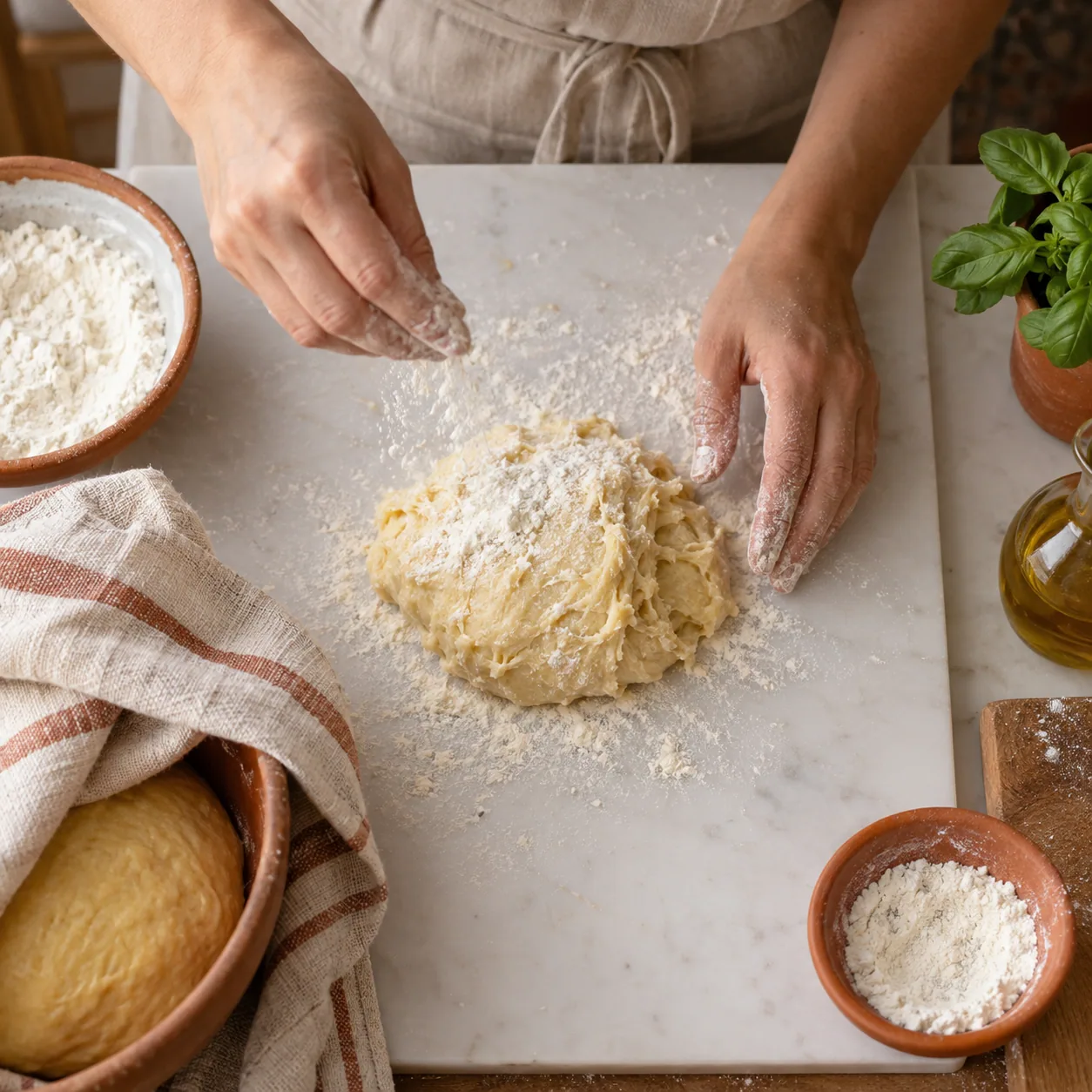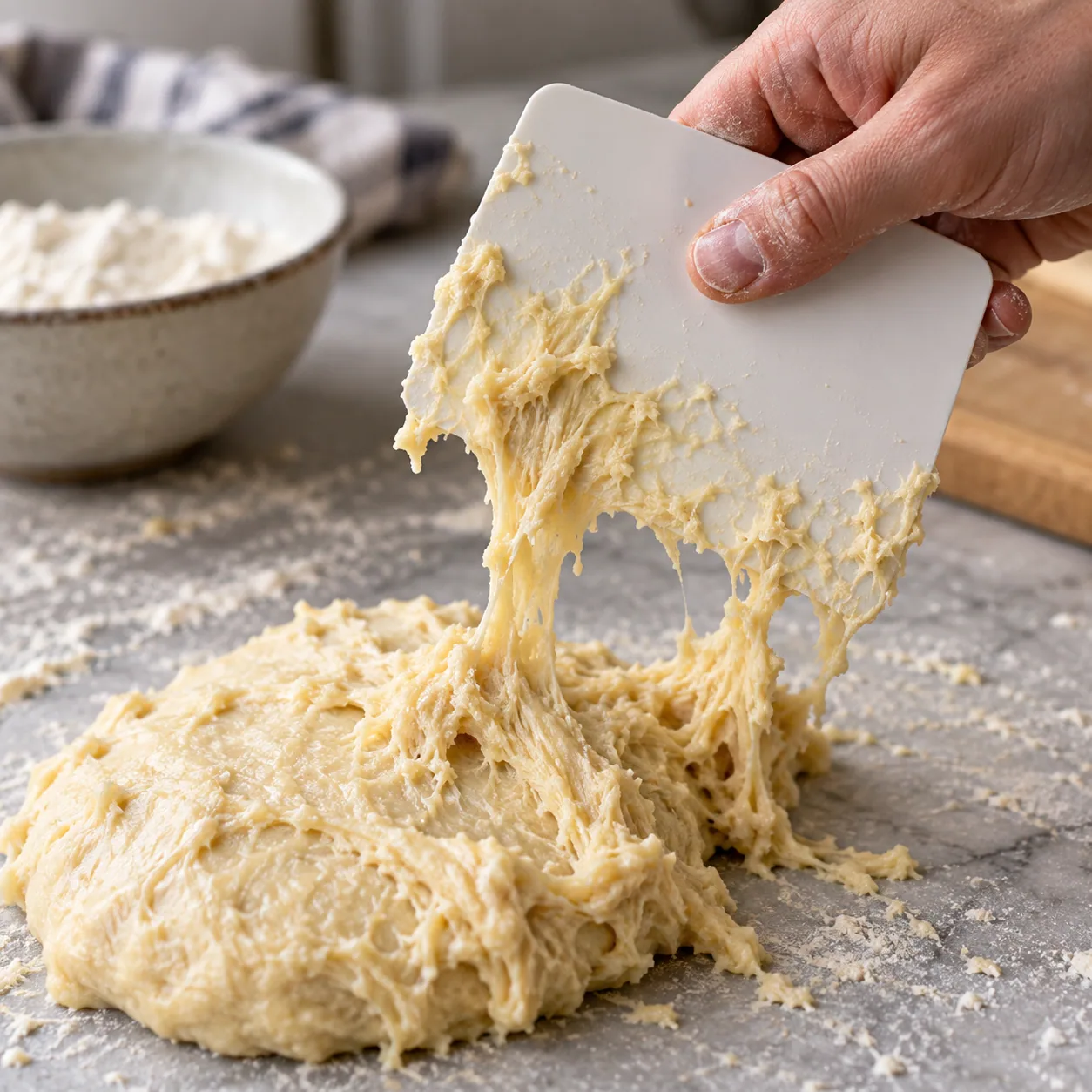
Before adding more flour, identify which checkpoint your dough has missed: the measured formula, the finished knead, the covered rest, or only the rolling surface. A light contact dusting is appropriate at the rolling stage; it is not evidence that a wet dough formula has been repaired.
Use one complete recipe as the reference. This guide uses King Arthur Baking’s Fresh Pasta recipe, which specifies either 290g Pasta Flour Blend or 280g all-purpose flour, three large eggs, salt, and semolina for dusting. If you used different flour, extra liquid, puree, or a different egg quantity, return to that recipe’s own instructions rather than borrowing the checkpoints below.
Check 1: Did the measured formula change?
Compare what entered the bowl with the selected recipe before correcting the texture. Confirm the flour by weight when possible, the number of eggs, and any extra wet ingredient. King Arthur’s two listed flour options use different weights, so “the same number of cups” is not a reliable substitution rule.
If the ingredients or quantities changed, record that difference. The dough may still be usable, but this article cannot calculate a universal extra-flour amount for an altered formula. Adding unmeasured handfuls would hide the size of the change.
Check 2: Has mixing reached the recipe’s firm-dough stage?
In the hand-mixed method, the dough begins soft and loose as flour is drawn into the eggs. King Arthur then directs the cook to continue folding and pressing until it comes together and to knead on an unfloured surface for 1 to 2 minutes, ending with a smooth, firm dough.
That sequence matters. A loose mass during the stated mixing process has not yet reached the recipe’s finished checkpoint. Continue the recipe’s folding, pressing, and kneading before deciding that surface flour is the solution.
Stop and compare again when the dough should be smooth and firm. If it still smears across the unfloured surface rather than behaving like the recipe describes, do not bury the mismatch under repeated dusting. Recheck the measured ingredients and use the recipe publisher’s support or start a new measured batch if the cause cannot be identified.
Check 3: Did the dough receive its covered rest?
King Arthur’s Fresh Pasta rests tightly wrapped for at least 30 minutes at room temperature. Refrigerated dough returns to room temperature for at least 30 minutes before rolling. The publisher’s pasta-machine guide likewise says the dough should be smooth and elastic, not overly sticky, and should rest for at least 30 minutes or as its recipe directs.
Do not judge the rolling behavior before completing that step. Keep the dough covered for the prescribed rest; leaving it exposed introduces drying, which is a different condition from excess wetness.
Check 4: Is the sticking limited to rolling contact?
After the formula, knead, and rest match the recipe, work with one covered portion at a time. King Arthur tells cooks to dust both sides of the dough and to flour as necessary while moving through progressively thinner settings. Its machine guide specifies a light dusting on the dough and rollers.
This is the point for contact flour. Apply it to the surfaces that adhere, then make the next pass. If the whole piece again smears or leaves wet residue, return to the earlier checkpoints instead of repeating the same dusting cycle.
Use one decision record
Write down only the checkpoint that failed and the action taken:
| Observation | Next action |
|---|---|
| Ingredient or weight differs from recipe | Stop using the recipe’s texture milestones as if the formula were unchanged |
| Dough is still in the soft, loose mixing stage | Complete the recipe’s folding, pressing, and kneading |
| Finished dough has not rested | Cover and complete the specified rest |
| Rested dough sticks only at dough-to-tool contact | Use the recipe’s light flour-as-needed step |
| Rested dough remains wet throughout | Recheck measurements; do not claim a universal rescue quantity |
Pasta By Hand has not kitchen-tested this diagnostic guide. Its AI illustrations show checkpoints, not a demonstrated flour correction.