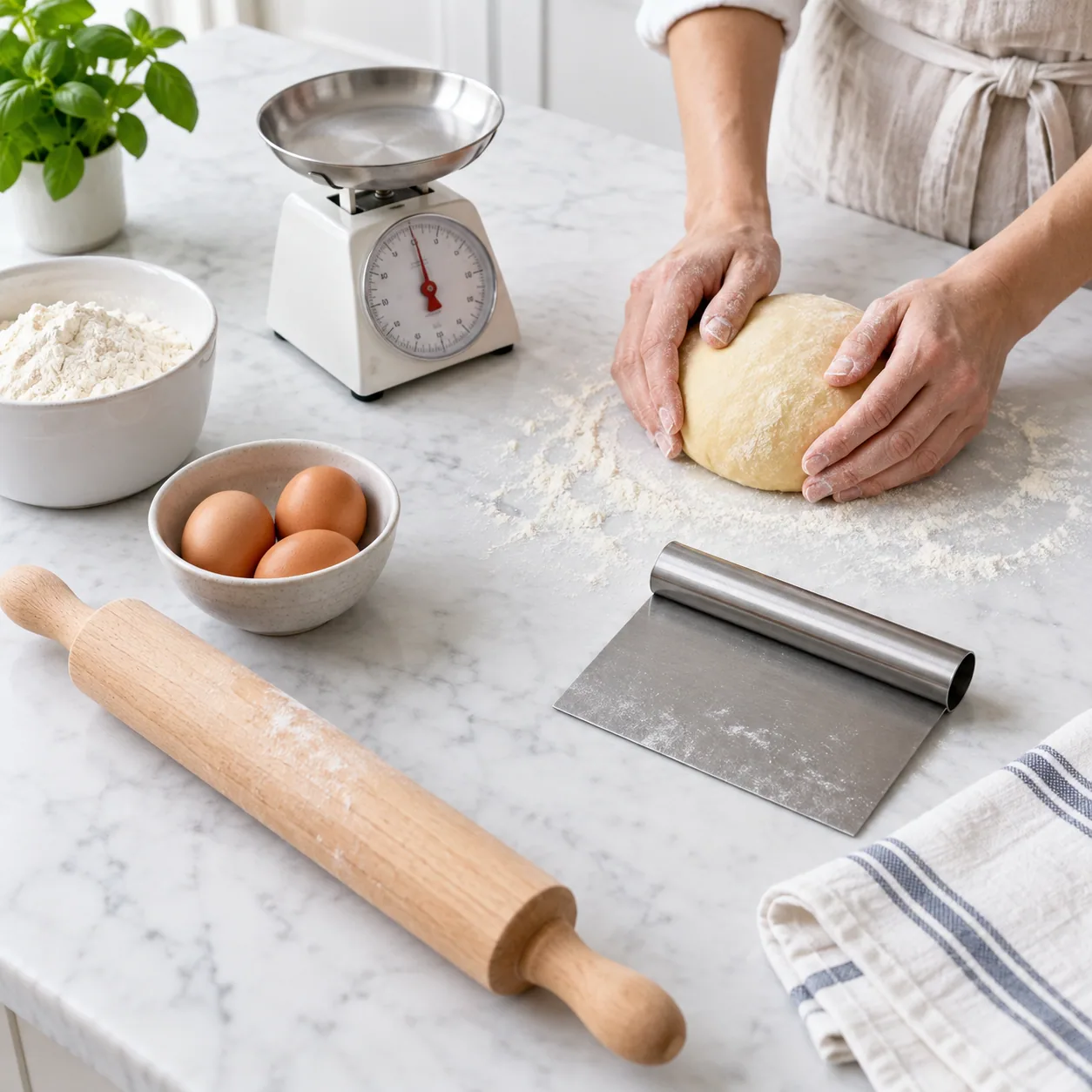
A useful first pasta kit does four jobs: measure ingredients, flatten dough, move dough, and cut it. You do not need to buy a machine or a drawer of specialty cutters to cover those jobs. Start with what is already in your kitchen, then add one tool only when you can name the problem it will solve.
This is a function guide, not a product review. No scale, rolling pin, board, scraper, or cutter was hands-on tested for this article.
Start with accurate weighing
A digital kitchen scale makes it easier to repeat a dough because flour can settle differently in a measuring cup. King Arthur Baking recommends weighing flour for more consistent measurement and identifies tare, capacity, display readability, and footprint as practical scale features.
For pasta, the useful routine is simple:
- Put the mixing bowl on the scale and use the tare or zero function.
- Weigh the flour specified by your chosen recipe.
- If the recipe gives egg or water by weight, measure that separately before mixing.
- Record what you used and how the dough behaved after its covered rest.
A standard kitchen scale is enough when it can handle your bowl, display the units used by the recipe, and remain readable with the bowl in place. Check the maker’s instructions if the scale gives inconsistent readings or behaves unexpectedly; do not diagnose a dough by changing ingredients before confirming that the measurement is reliable.
Choose a pin for your counter and hands
The rolling pin’s job is to flatten a manageable piece of dough evenly. For a first batch, an ordinary smooth pin can do that job. The important questions are personal and physical: Can you grip it comfortably? Can you move it through a full stroke without striking a wall, cabinet, bowl, or dish rack? Where will it be stored?
Measure the clear width and depth of the work area before shopping. If possible, handle a pin before buying; online, compare its listed dimensions with the space you actually have. A longer pin is not automatically more useful in a narrow kitchen.
Inspect any pin before use. Do not use one with damage, loose parts, or a surface that cannot be cleaned as its maker directs. An improvised bottle adds breakage and handling concerns, so a sound rolling pin is the clearer choice for repeated use.
Give the dough a stable work area
The surface does not need to be a special pasta board. It does need to stay still, provide enough room for the portion you are rolling, and be suitable for food preparation and cleaning.
Before mixing dough, place the board or mat where you intend to work and make a few rolling motions. If it shifts, hangs over an edge, or forces you to reach across another appliance, change the setup. Follow the surface maker’s care instructions rather than assuming that every wooden board, stone counter, or mat is cleaned the same way.
Work with a smaller dough portion when the available surface is compact. That adjustment is usually more useful than buying a large accessory that cannot be used or stored comfortably.
Use a scraper to lift and gather
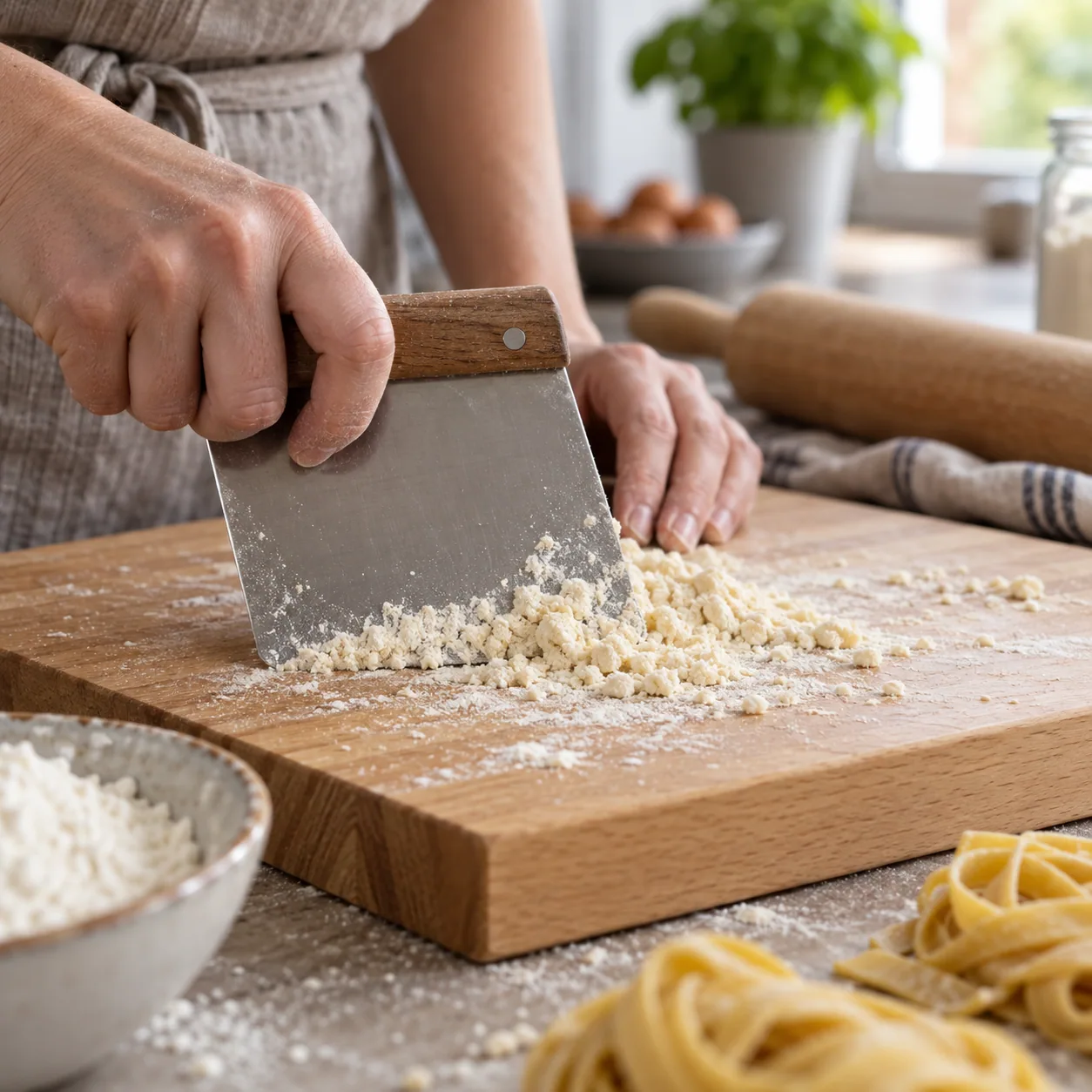
A bench scraper’s main value is separation: it can gather loose flour and dough pieces, lift dough from the work surface, and divide a dough portion when its edge is intended for that use. It keeps those jobs separate from fine cutting.
For ribbons and rectangles, a suitable kitchen knife can be enough. Use it on an appropriate, stable board and keep hands clear of the cutting path. A pasta wheel is optional; a decorative edge changes appearance, not whether the beginner has measured, rolled, and handled the dough successfully.
Check the scraper or cutter for damage, and follow its manufacturer instructions for intended use and cleaning. Replace a damaged cutting tool instead of compensating with extra force.
Buy only after naming the missing function
Before ordering anything, finish this sentence: “The repeated problem I want this tool to solve is ____.” Then match the problem to a function:
- inconsistent ingredient measurement → a readable kitchen scale;
- no comfortable way to flatten a small sheet → a pin that fits your hands and counter;
- awkward lifting and cleanup → a suitable bench scraper;
- no safe way to cut the chosen shape → an appropriate knife, wheel, or cutter.
If a tool does not solve the named problem, it can wait. When buying online, the FTC recommends checking the complete description, total cost, seller information, and return or refund terms. Those checks help with the purchase decision; they do not substitute for product testing or prove that a particular tool will suit you.
A small first kit should fit the next meal, the available storage, and the way you actually work. Begin with a scale, a comfortable pin, a stable food-preparation surface, and a suitable scraper or cutting tool. Make one batch, note what was genuinely difficult, and let that observation—not a long accessory list—guide the next purchase.