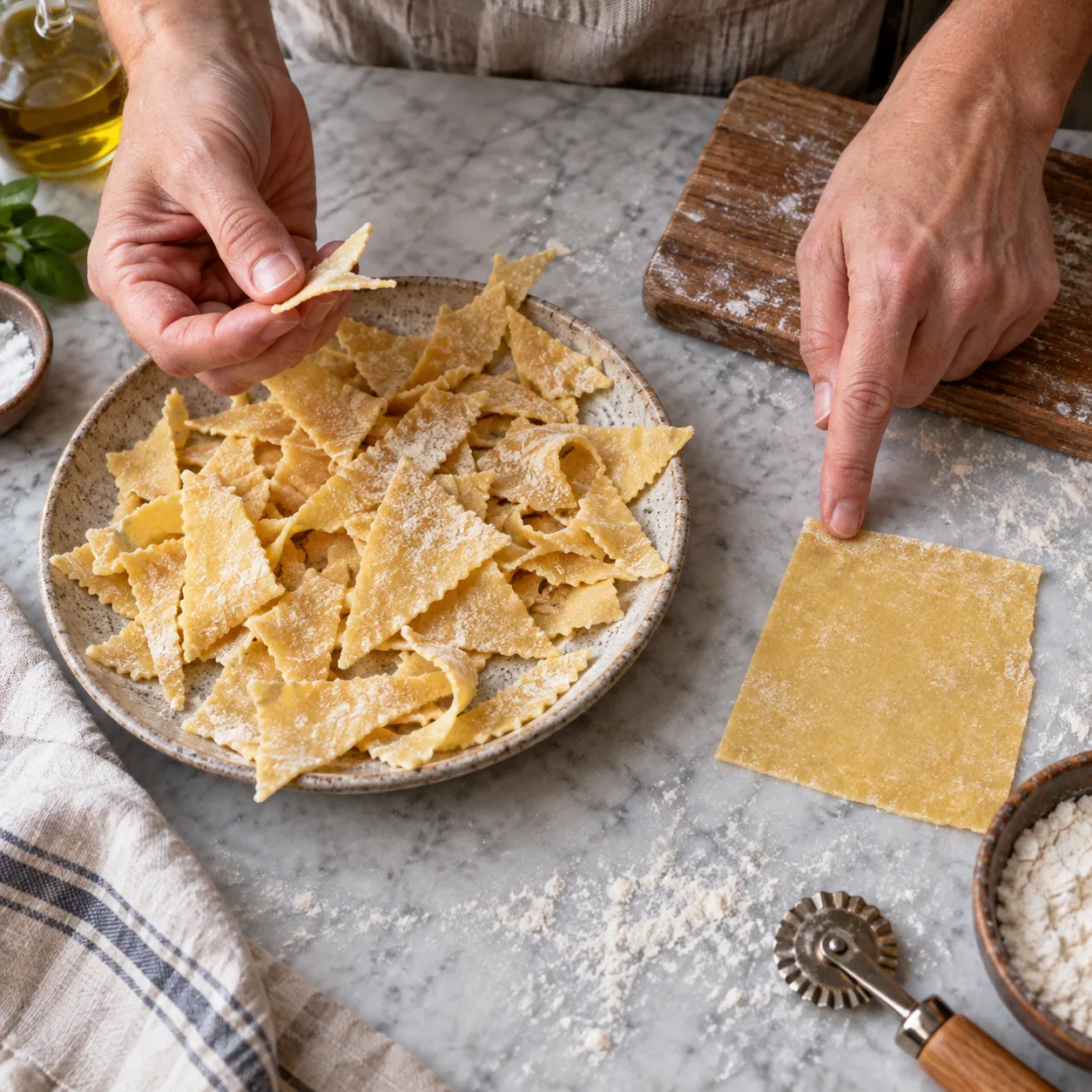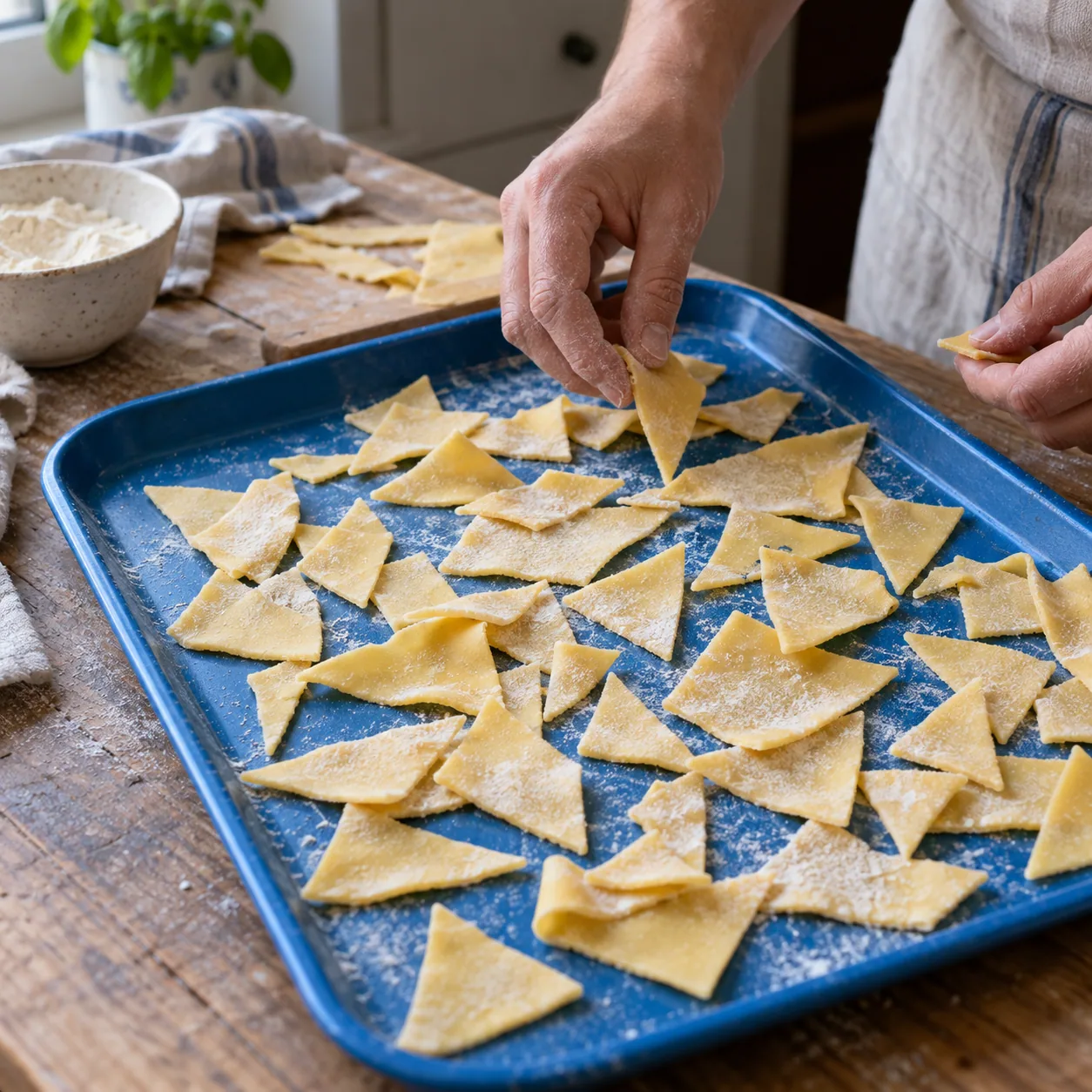
Maltagliati gives clean pasta-sheet scraps a deliberate destination: cut them into irregular pieces, keep pieces from the same dough and rolling thickness together, dust them lightly, and cook them according to the base pasta recipe. The outline may vary; the cooking assumptions should not.
The name is commonly translated as “badly cut.” Domenica Marchetti, interviewed by Milk Street, describes maltagliati as a thrifty shape connected to leftover pieces from ravioli and other cut pasta. MIT OpenCourseWare’s pasta lesson likewise instructs cooks to save irregular scraps and identifies them as maltagliati.
Decide which scraps belong together
Use scraps that came from the same fresh dough and the same rolling session. A narrow edge strip and a corner can share a batch when their thickness is comparable. Keep a noticeably thicker piece out of that group or roll it to the same stage using the instructions for the original dough.
This is a cooking-control choice, not a rule that maltagliati must look uniform. Similar thickness lets the base recipe remain the useful reference for doneness even when the perimeter is irregular.
Do not mix in scraps of unknown age, pieces dropped on an unclean surface, or remnants from a filling with different handling requirements. This guide is a way to use suitable sheet offcuts, not a reason to save every fragment.
Cut for handling, not symmetry
Lay the scraps flat and cut very long strips or oversized corners into pieces that can move freely on the tray and fit comfortably on a spoon or fork. Triangles, trapezoids, and uneven rectangles can all remain visibly irregular.
Avoid turning the task into a second precision-cut shape. The useful checks are simpler:
- no piece is folded onto itself;
- pieces in one batch have comparable sheet thickness;
- each piece can be lifted from the board without dragging several others with it;
- very small crumbs are excluded rather than treated as full pasta pieces.
King Arthur Baking’s pasta class specifically includes maltagliati among shapes cut from a sheet after a brief drying period. The same class instructs cooks to toss freshly cut pasta with a little flour to prevent sticking.
Make one loose tray batch
Dust the cut pieces lightly according to the base recipe, then spread or loosely gather them so individual pieces remain visible. If several scraps overlap, separate them before they settle together. The aim is not a styled nest; it is a batch that can be transferred without arriving as one compressed stack.
Keep scraps from a different thickness or dough formula in a separate group. That separation preserves a meaningful tasting sequence: thinner pieces can be checked before thicker ones rather than forcing one pot to satisfy unrelated pasta.
Cook by the original dough recipe
Use the water, salting, and timing instructions for the dough recipe that produced the scraps. King Arthur’s class material gives approximately 3 to 5 minutes for its own fresh pasta, depending on size and thickness; MIT’s lesson also gives 3 to 5 minutes for its formula. These matching ranges do not establish a universal maltagliati time.
Stir briefly after adding the pieces, then check the thinner or smaller pieces first. Remove or continue cooking according to the texture target in the recipe you followed. For serving, Marchetti notes that the broad, flat shape can work in hearty soups or with substantial sauces, but the sauce choice does not replace the dough recipe’s cooking guidance.
Pasta By Hand has not kitchen-tested this scrap-use guide. Its AI illustrations show irregular-piece ideas, not a documented batch.