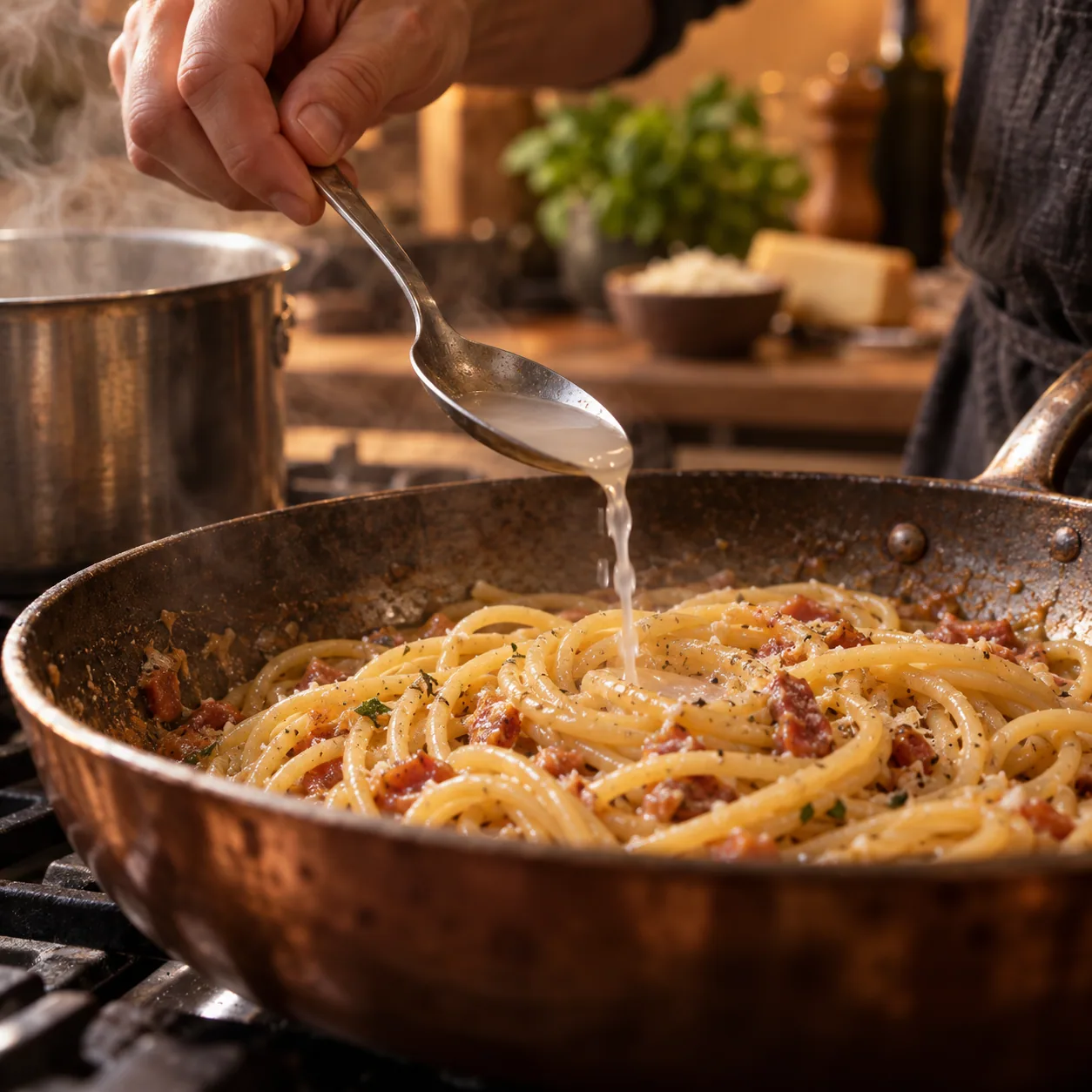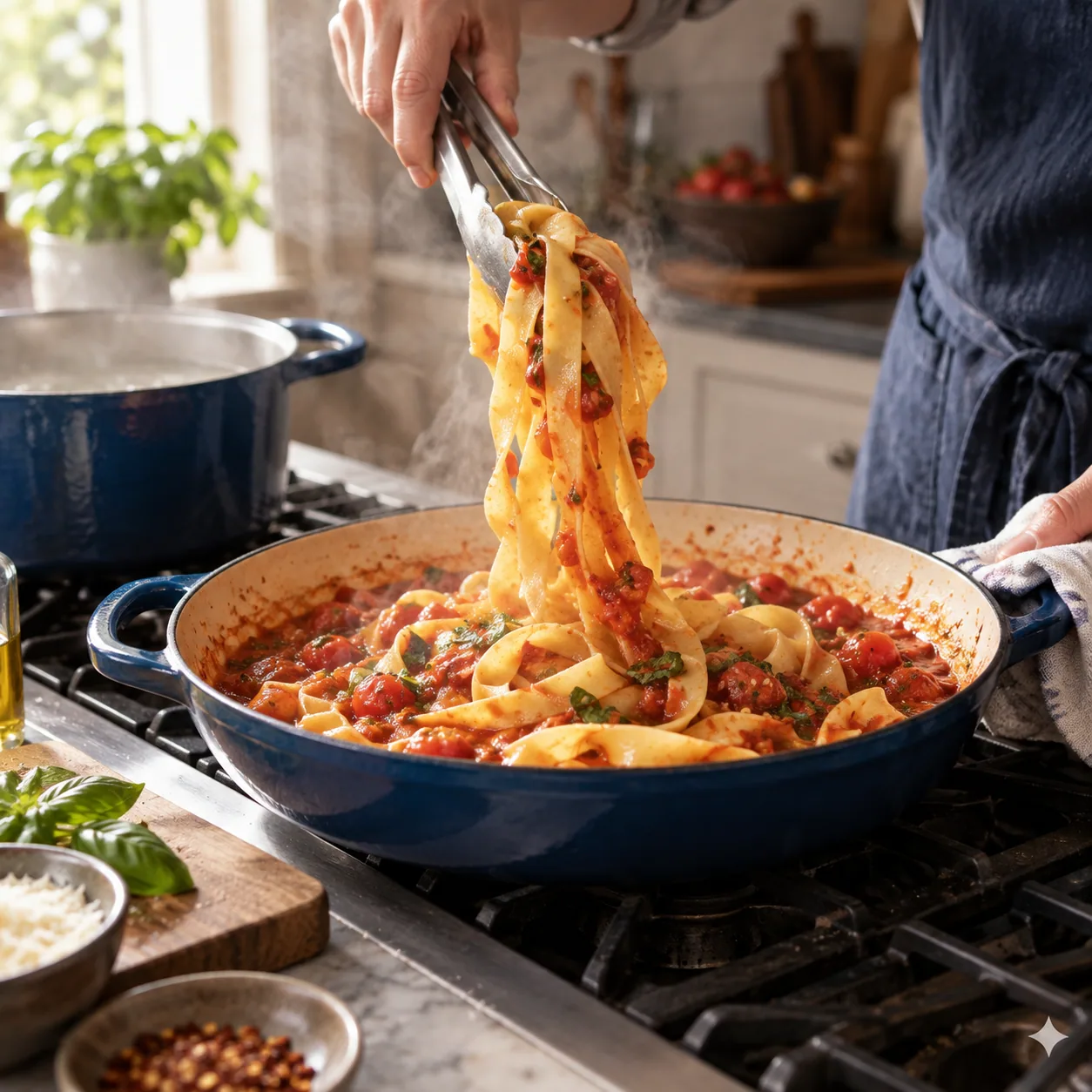
For dried packaged pasta, have the sauce ready before the pasta finishes, reserve cooking water before draining, then move the pasta into the sauce for the final minute or two. Add only as much reserved water as the sauce needs to coat the noodles, and serve as soon as the texture is right.
This timeline follows Barilla’s dried-pasta guidance. Fresh handmade pasta can cook much faster and should follow its own recipe instead.
Before the pasta goes into the pot
Put the sauce in a skillet or pan large enough to receive the cooked pasta. Finish chopping, grating, and measuring before the package timer nears its end. Barilla recommends using the boiling time to prepare ingredients so the finishing step is not interrupted.
Read both the pasta package and the sauce recipe. The package supplies the pasta’s cooking reference; the sauce recipe tells you whether it should be hot, warm, or off heat when the pasta arrives. Do not force a cheese-based, egg-based, pesto, or long-simmered tomato sauce through one universal burner setting.
One minute before the package timer
Barilla directs cooks to reserve 1 to 2 cups of pasta water shortly before the pasta finishes. Scoop it into a heat-safe container before draining. You may not use all of it; reserving the water simply keeps the adjustment available.
The same guidance explains that pasta releases some starch into the cooking water. Adding some of that water contributes both liquid and starch as pasta and sauce are combined. Because the cooking water is salted, add it gradually and taste the finished sauce before adding more salt.
Do not rinse the drained pasta for this workflow. Barilla’s cooking guide says rinsing removes starch that helps the sauce bind to the pasta.
The final minute or two
Transfer the drained pasta to the waiting sauce. Barilla’s general cooking method finishes the two together for about one or two minutes, adding reserved water as needed.
Use the pan rather than a fixed water quantity as your cue:
- If the sauce sits in a thick mass and will not move around the pasta, add a small splash of reserved water and toss again.
- If the sauce already coats the pasta and moves freely, do not add water simply because some was reserved.
- If the pasta has reached the texture you want but the sauce is still too loose, remove the pasta rather than overcooking it while reducing the sauce.
The exact amount changes with the sauce, pasta, pan, and cooking water. Reserving 1 to 2 cups is not an instruction to pour all of it into dinner.
Serve, then record one adjustment
Move the pasta to plates once the sauce coats it and the pasta has the desired bite. Waiting in a colander separates this workflow into two cooling stages; transferring directly to the ready sauce keeps the final adjustment in one pan.
For the next dinner, record only what affected the finish: whether the sauce was ready on time, approximately how much water you added, and whether the pasta needed the full package time before the pan. That note is more useful than trying to create one water measurement for every sauce.
Pasta By Hand has not kitchen-tested this workflow. The AI illustrations are explanatory and do not document a cooked result.