Choose pasta flour by starting with the noodle you want to make. A tender sheet for ribbons, a durable wrapper, and a firm hand-shaped piece do not ask for exactly the same texture. The words all-purpose, 00, durum, and semolina are useful clues, but the complete product description and the recipe still matter.
This guide compares documented flour characteristics and offers a small home comparison method. It does not present a kitchen-tested dough formula.
A quick way to narrow the choice
| Starting point | What the cited source says | What to check on your bag |
|---|---|---|
| All-purpose flour | Can make toothsome pasta while remaining practical to roll | Protein information, ingredients, and whether your recipe was written for it |
| 00 flour | The cited product is finely milled and intended to make a smooth, rollable dough | Intended use, wheat description, protein information, and the manufacturer’s recipe guidance |
| Durum flour | Fine durum flour is described as strong and suitable for shaped or extruded pasta | Whether the product is fine durum flour or a different grind |
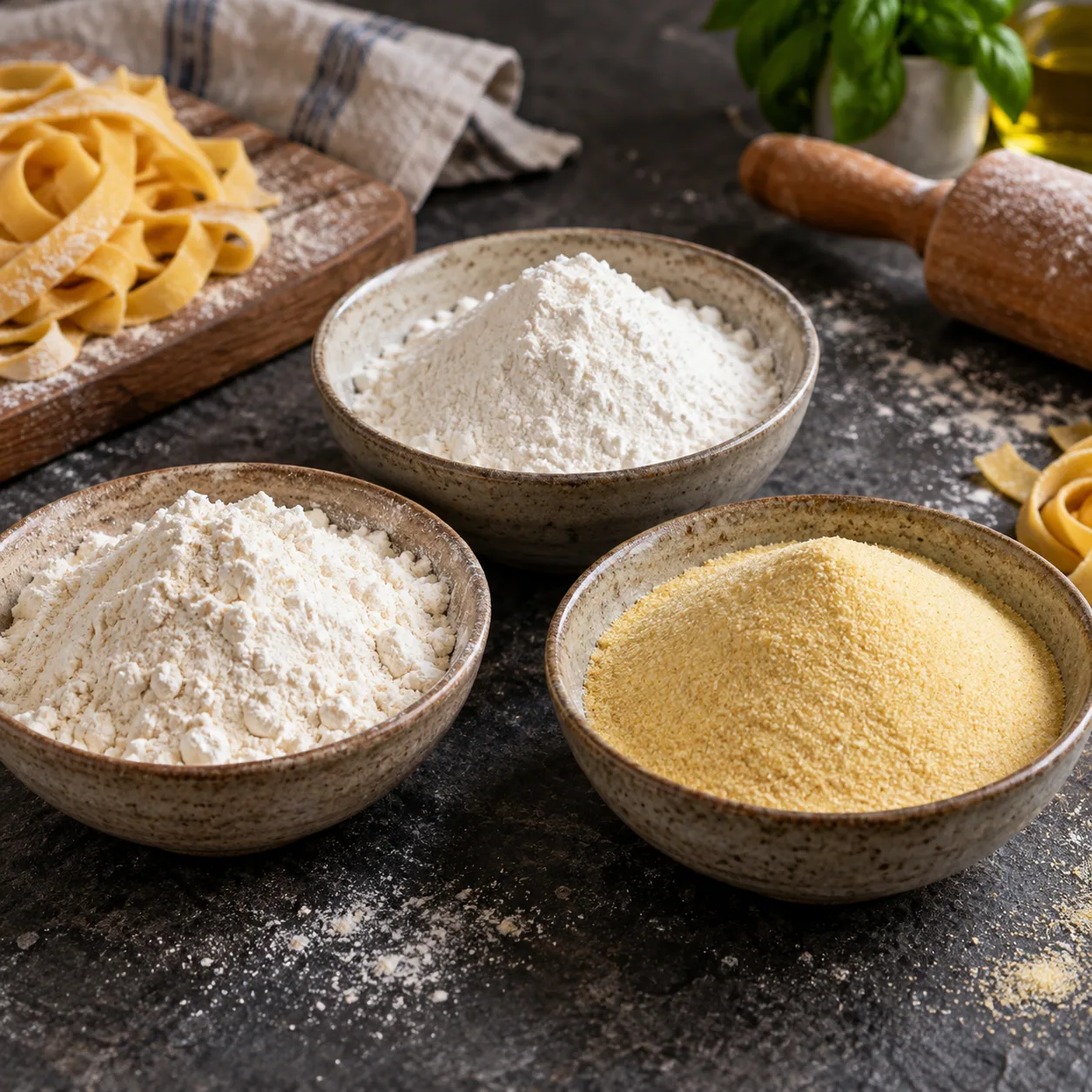
| Semolina | Coarse durum semolina is described as producing chewy, hearty pasta and a coarser exterior | Grind, intended use, and whether the recipe uses it in the dough or only for dusting |
These are starting points, not guarantees. King Arthur Baking’s comparison describes specific products, and flour specifications vary among brands and markets.
All-purpose is a sensible first reference point
All-purpose flour is often the easiest starting point because it is widely available and appears in many fresh-pasta recipes. In King Arthur Baking’s comparison, its 11.7% protein all-purpose flour is described as strong enough for toothsome pasta while still being easy to roll. That number belongs to the cited product, not to every bag labeled all-purpose.
Use the flour named by your recipe when possible. Keep the bag or photograph its label until you know how the dough handled. If a second attempt behaves differently, the exact flour is more useful troubleshooting information than a note that only says “plain flour.”
Read beyond the 00 on the front
The cited 00 flour is finely milled, but the source also explains that it is made from a mixture of hard and soft wheat and is designed to combine strength with easy rolling. That fuller description matters. It suggests a practical rule: treat 00 as one part of the label, not as a complete promise about protein, tenderness, or suitability for every pasta.
Check the manufacturer’s intended use and recipe guidance. A product marketed mainly for high-temperature pizza may not be the same choice as a flour presented for delicate fresh-pasta sheets, even when both use a 00 designation.
Distinguish fine durum flour from coarse semolina
Durum names can be confusing because grind and intended use differ. In the cited comparison, fine durum flour is associated with strength, a pale-yellow color, and pasta that keeps a firm bite. Coarse semolina is described as giving homemade noodles a hearty, chewy texture and a slightly coarser exterior.
Do not substitute solely because two bags mention durum wheat. Read whether the product is fine flour, coarse semolina, a pasta blend, or a dusting product, and follow a recipe written for that form. If the recipe combines flours, keep its proportions rather than treating the blend as permission to improvise an untested formula.
Compare two flours without changing everything else
When two suitable flours are available, make the comparison small. Use the same recipe, weighing method, covered rest, shape, and rolling thickness for both portions. Record the product names and the liquid amount specified by the recipe.
After the rest, note whether each portion is manageable for the intended shape. Cook a small sample from each and compare the qualities that matter for that meal: ease of rolling, firmness after cooking, surface texture, and fit with the sauce. This is a structured home observation, not a scientific test and not evidence that one flour is universally better.
Change one variable at a time. If flour, liquid, rest, and sheet thickness all change together, the result will not tell you which choice mattered.
Let the recipe and finished shape decide
For a first dinner, choose a flour directly supported by the recipe rather than buying several unfamiliar bags. All-purpose can be a practical beginning for hand-cut egg ribbons. A recipe for a firm water-based hand shape may instead specify a durum product or semolina. Follow that recipe’s wording rather than transferring assumptions from a different shape.
Flour is also only one part of the result. Rolling thickness, rest, cutting, and cooking all affect the plate. If the first batch disappoints, write down the specific problem—difficult rolling, tearing, unwanted softness, or an unsuitable shape—before changing flour.
Keep one final safety boundary: flour is a raw food. The FDA advises against tasting raw flour or uncooked dough because flour can carry harmful bacteria. Judge flavor and texture only after the pasta is cooked.